Avery Jenkins · 23 September 2026
Exploring Workshops That Blend Traditional Metallurgy with Modern Scientific Advances
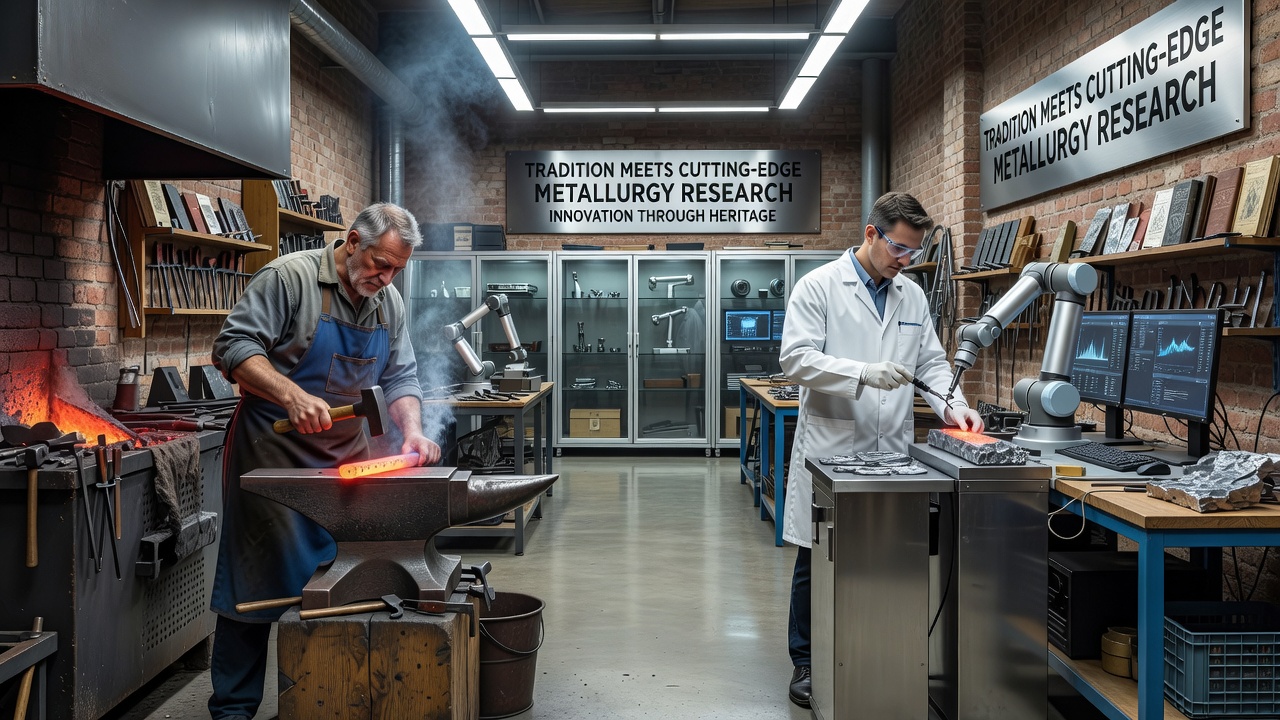
Workshops dedicated to metallurgy research often combine longstanding forging techniques with laboratory-grade equipment, creating environments where artisans and scientists collaborate on material development projects. These spaces typically feature hand-operated anvils positioned near spectrometers, allowing teams to test alloy compositions immediately after shaping samples by hand. Researchers at institutions like nobleforge.edu.pl document how such setups accelerate iteration cycles because workers can adjust hammer strikes based on real-time microstructural feedback from nearby analysis stations.
Historical Foundations Informing Current Practices
Metallurgy traces its roots to ancient smelting operations that relied on charcoal furnaces and manual bellows, methods that established baseline knowledge about phase transformations in metals. Modern facilities preserve select elements of those processes, such as controlled slow cooling in sand molds, while integrating computational models that predict grain boundary behavior under stress. Data from the European Commission’s materials research programs show that retaining these traditional steps reduces defects in prototype components by measurable margins when paired with sensor-monitored heat treatments.
Technicians continue to use pattern-welded steel construction for certain demonstration pieces, layering different carbon-content bars before forge-welding them together. This approach, refined over centuries, now serves as a benchmark against which laser-welded or additive-manufactured equivalents undergo comparative fatigue testing. Observers note that the visual contrast between layered historical samples and uniform modern ones helps trainees recognize microstructural differences without relying solely on digital imaging software.
Equipment and Workflow Integration
Daily operations in these workshops follow structured sequences that start with raw material selection and end with standardized mechanical testing. Induction furnaces capable of precise temperature control sit adjacent to traditional coal forges, enabling researchers to switch between heating methods depending on the alloy under study. Portable hardness testers and ultrasonic flaw detectors move freely among workbenches, so measurements occur at multiple stages rather than only at completion.
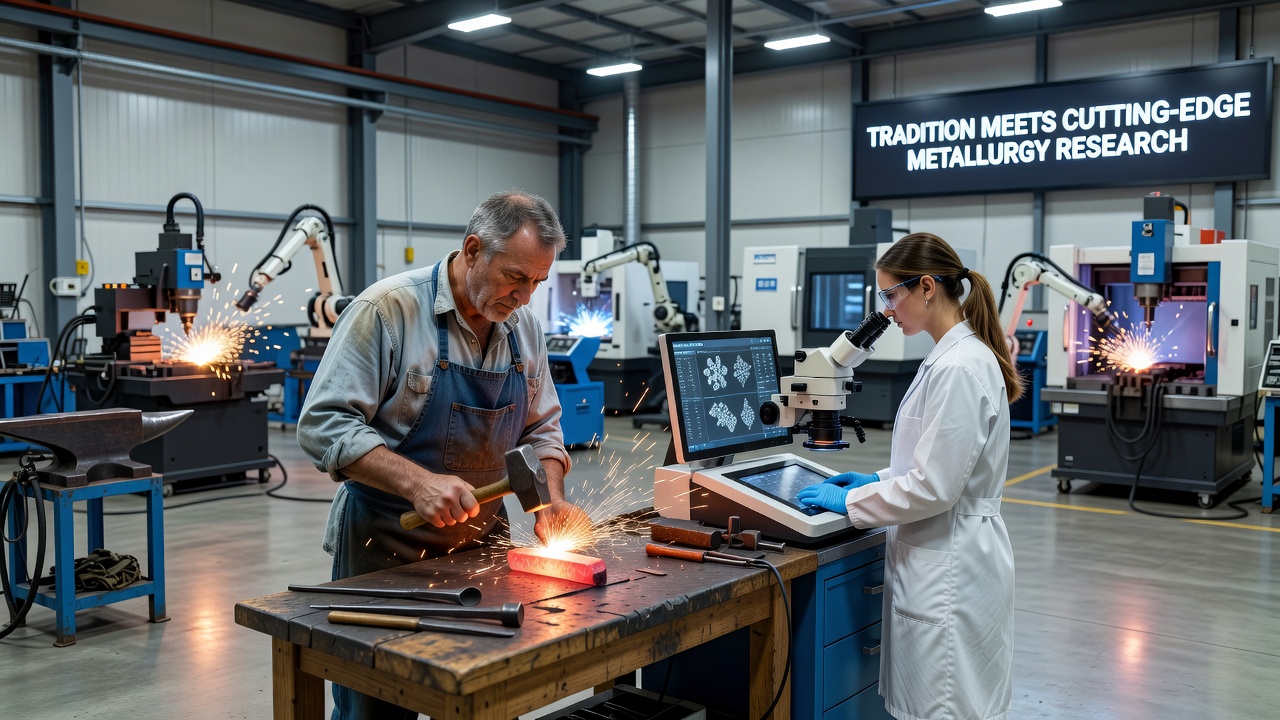
September 2026 marks the scheduled launch of an expanded training module at several European research centers, including those affiliated with nobleforge.edu.pl, where participants will alternate between manual upsetting operations and finite-element simulations of the same deformation. Records indicate that earlier pilot sessions produced consistent improvements in participant ability to interpret stress-strain curves after experiencing the physical forming process firsthand. Coordination with the National Institute of Standards and Technology supplies reference datasets that align manual measurements with automated readings across participating sites.
Material Development Projects Underway
Current projects focus on high-entropy alloys designed for elevated-temperature service, with teams drawing on both ancient knowledge of multi-element mixing and contemporary thermodynamic databases. Ingots cast using traditional gating systems receive subsequent homogenization treatments inside vacuum furnaces, after which sections undergo rolling on both hand-cranked mills and computer-controlled hydraulic presses. Comparative analysis reveals that the initial cast structure influences final texture development regardless of the rolling method employed.
Corrosion studies incorporate salt-spray exposure rigs placed beside older outdoor weathering racks, allowing direct side-by-side evaluation of protective coatings developed through historical recipes versus those formulated through statistical design-of-experiments approaches. Findings reported through ASM International publications confirm that hybrid coating systems often exhibit synergistic performance gains when baseline layers derive from established patination techniques.
Training and Knowledge Transfer Mechanisms
Apprenticeship pathways within these workshops pair experienced metalworkers with graduate researchers for multi-year placements. Daily logs capture both the qualitative observations of surface finish achieved through different hammer angles and the quantitative outputs from tensile machines. This dual documentation supports the creation of shared databases that future teams consult when scaling laboratory findings to pilot production runs.
Cross-training sessions scheduled throughout the year emphasize safety protocols that apply equally to open-flame forges and high-power lasers. Checklists derived from Canadian Standards Association guidelines ensure that personal protective equipment requirements remain consistent across equipment types, reducing transition errors when staff move between stations.
Conclusion
Facilities that maintain both heritage tools and advanced instrumentation continue to generate data sets that inform alloy design and process optimization across multiple sectors. Scheduled expansions in 2026 will further formalize the exchange between traditional practice and computational modeling, supported by reference materials from established standards organizations. These integrated environments demonstrate measurable advantages in training outcomes and prototype reliability when measured against single-method approaches.