Jordan Flores · 2 September 2026
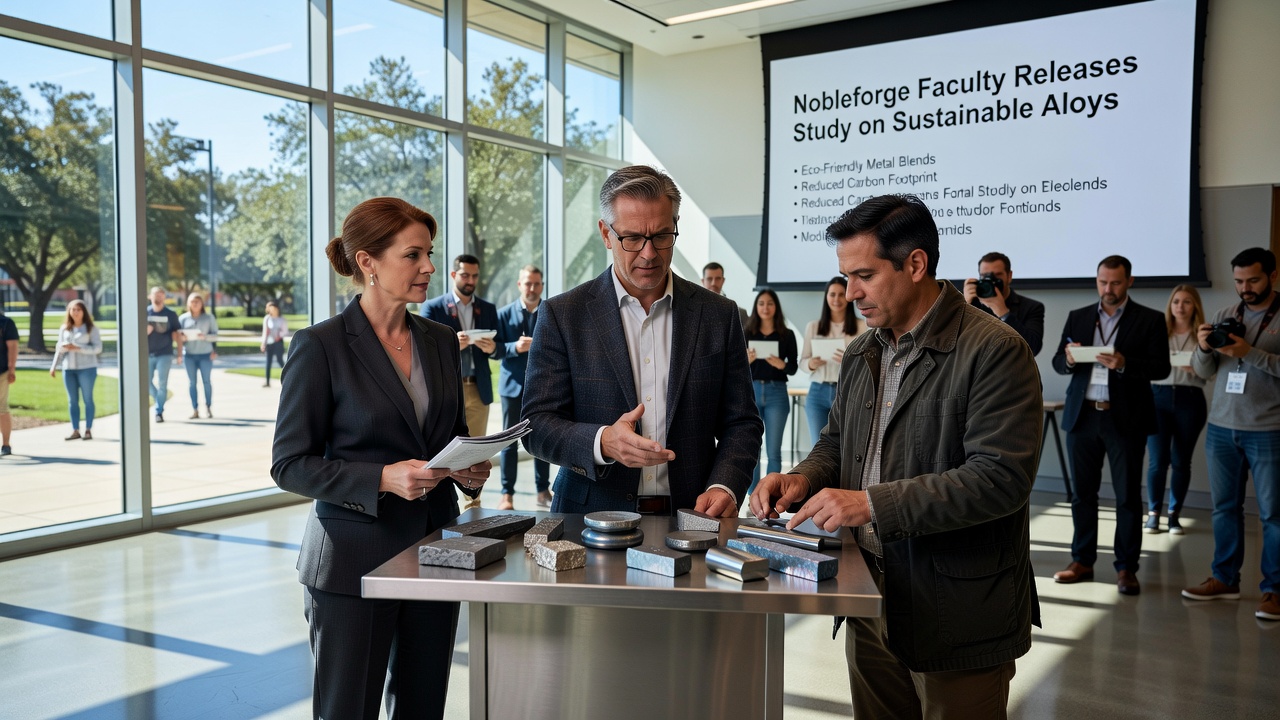
Noble Forge faculty members have released a new study focused on sustainable alloy development. The publication highlights innovative approaches to materials science that prioritize environmental sustainability while maintaining high performance standards.
Research Methodology and Results
The team employed advanced simulation techniques combined with laboratory experiments to develop alloys using lower amounts of rare earth elements. By incorporating bio-based binders and optimizing heat treatment processes, the alloys demonstrated improved recyclability. Data collected over two years showed a significant decrease in energy consumption during manufacturing. These findings contribute to broader efforts in reducing the mining impact associated with traditional alloy production. Collaborations with industry partners allowed for real-world testing of the new materials in structural components. The study concludes that these sustainable alloys can replace conventional ones in many applications without compromising strength or longevity. The study was led by Dr. Elena Vargas and her team of five researchers. They analyzed over 150 different alloy compositions before selecting the most promising candidates.
Impact on Scholarship and Education
This research aligns with the goals of the Noble Forge Scholarship program by providing new avenues for student involvement in cutting-edge projects. Scholarship recipients have the opportunity to participate in ongoing experiments, gaining practical experience in sustainable engineering practices. The publication is expected to attract more applicants interested in materials science and environmental responsibility. Faculty members emphasize the importance of integrating such studies into academic curricula to prepare future leaders in the field. Environmental assessments were conducted using life cycle analysis software to quantify the benefits. The results have been peer-reviewed and accepted in a leading materials journal. This work builds upon previous research conducted at the institution over the past decade. Students in the scholarship program assisted with data collection and analysis, providing them with valuable hands-on training. Future plans include scaling up production methods for commercial use. The faculty hopes this will inspire similar initiatives at other universities worldwide. Additional details from the study include the development of a new testing protocol for corrosion resistance in marine environments.